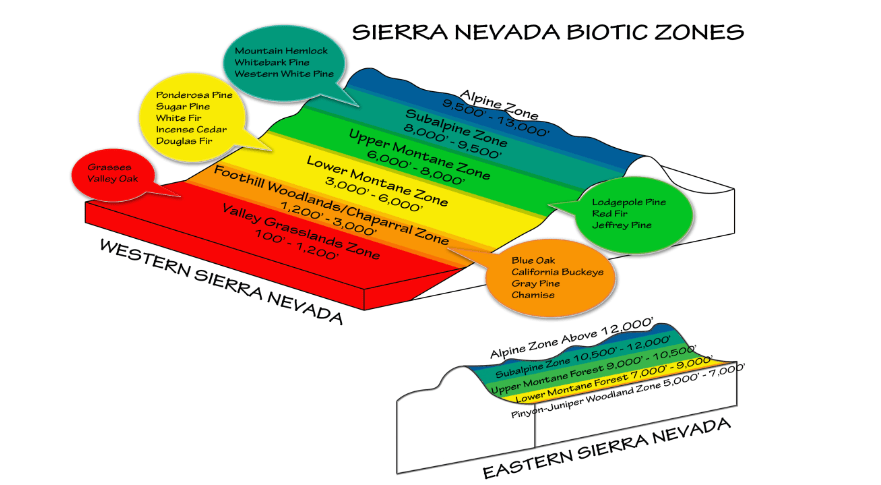
Here’s a breakdown of the different biotic zones that can be found in the Sierra Nevada Mountains:
Valley Grasslands: At the lowest elevations of the Sierra Nevada Mountains, there are grasslands dominated by native grasses, such as purple needlegrass and blue wildrye. These grasslands are typically found at elevations below 1,200 feet and receive less than 20 inches of precipitation annually.
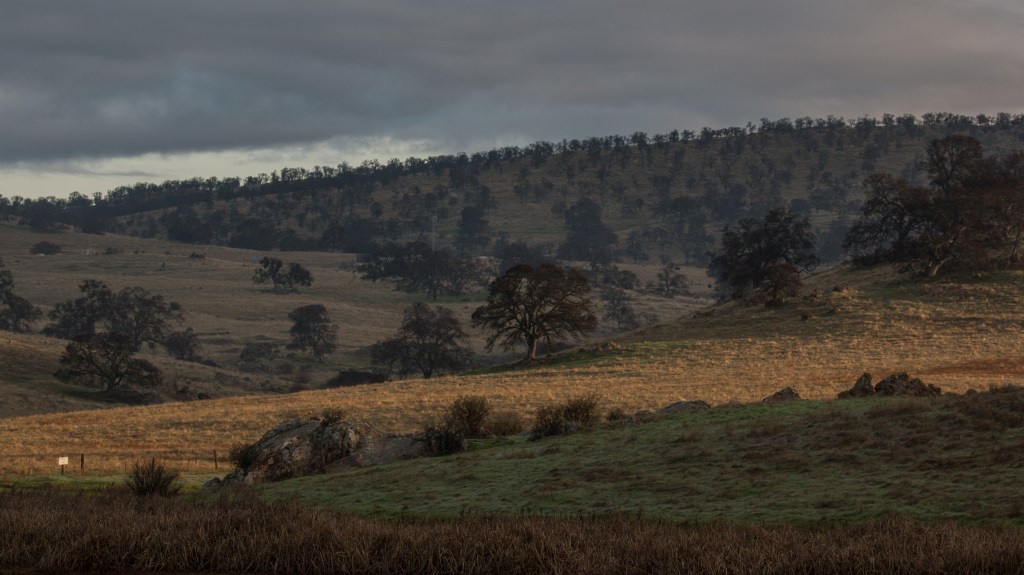
Foothill Woodlands: The foothill woodlands zone is found at elevations between 1,200 and 3,000 feet. This zone is characterized by oak woodlands and savannas, with trees like blue oak, valley oak, and gray pine dominating the landscape. These woodlands typically receive between 20 and 30 inches of precipitation annually.

Lower Montane Forests: The lower montane forests zone is found at elevations between 3,000 and 6,000 feet. This zone is characterized by mixed conifer forests, with trees like ponderosa pine, sugar pine, and incense cedar dominating the landscape. These forests typically receive between 30 and 40 inches of precipitation annually.

Upper Montane Forest: The upper montane forest zone is found at elevations between 6,000 and 8,000 feet. This zone is characterized by forests of red fir, lodgepole pine, and Jeffrey pine. These forests typically receive between 40 and 50 inches of precipitation annually.
Subalpine Forest: The subalpine forest zone is found at elevations between 8,000 and 9,500 feet. This zone is characterized by forests of whitebark pine, western white pine, and mountain hemlock. These forests typically receive between 50 and 60 inches of precipitation annually.
Alpine Meadow: The alpine meadow zone is found at elevations above 9,500 feet. This zone is characterized by meadows of grasses and wildflowers, with scattered trees like whitebark pine and foxtail pine. These meadows typically receive between 20 and 30 inches of precipitation annually.
Eastside Forest: The eastside forest zone is found on the eastern side of the Sierra Nevada Mountains, where the climate is drier and more continental. This zone is characterized by forests of singleleaf pinyon, Jeffrey pine, and juniper, with sagebrush and bitterbrush dominating the understory. These forests typically receive less than 20 inches of precipitation annually.


 Reflections of the Natural World