By Jim Gain

Learn 100 Common Valley Birds is a photo blog series highlighting the 100 most common Valley bird species.
Post #27 in the Learn 100 Common Valley Birds series. (Species 44, 45, & 46/100 + 3 BONUS birds)
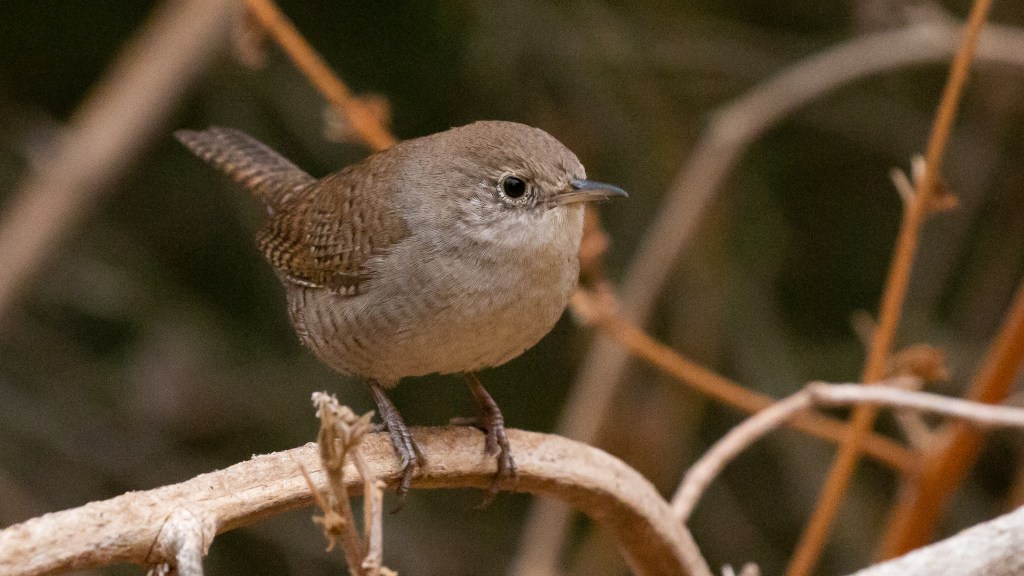
House Wren #44
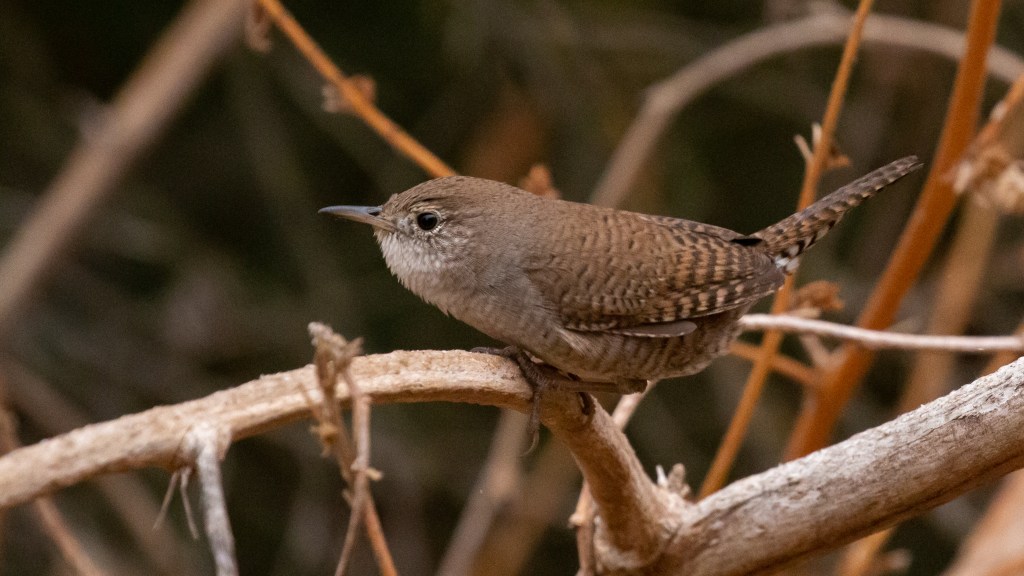
The House Wren (Troglodytes aedon) is a small, brown bird that is commonly found in the Central Valley of California. It has a round body with barred wings and short tail. The male and female birds look very similar, with the males being slightly larger and having a louder and more complex song.
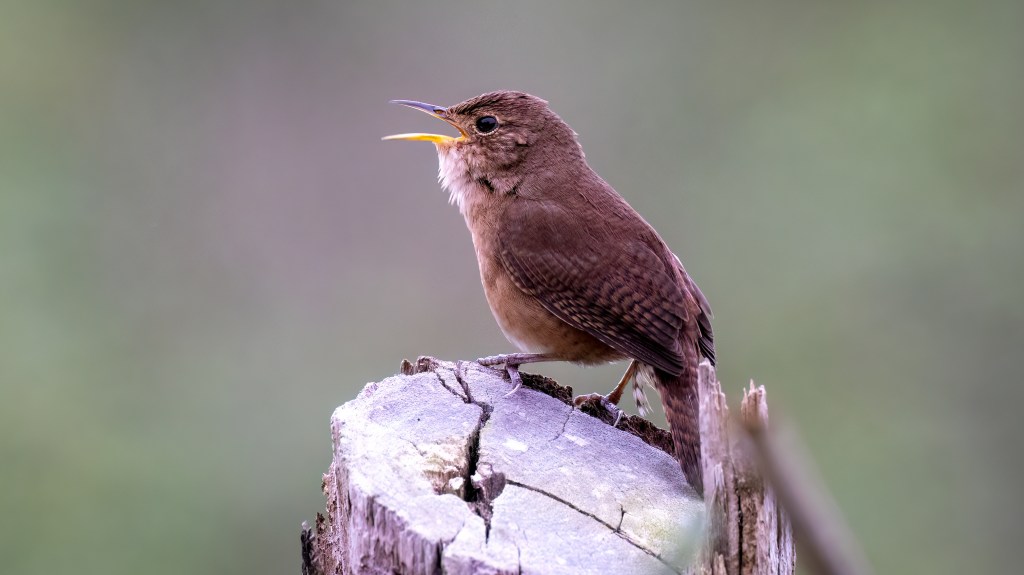
House Wrens are highly adaptable birds that are found in a wide range of habitats, from urban parks and gardens to forests and grasslands. They are known for their energetic behavior, frequently flicking their tails and wings as they hop and flit through vegetation in search of insects and spiders to eat.

In the spring and summer, they build nests in cavities, such as tree hollows, birdhouses, or even old shoes left lying around. The female lays 4-8 eggs, and both parents help feed and care for the young. House Wrens are also known for their aggressive territorial behavior, often attacking other birds that come too close to their nest site.
Marsh Wren #45

The Marsh Wren (Cistothorus palustris) is a small, secretive bird that can be found in marshes, wetlands, and other similar habitats throughout North America, including the Central Valley of California. Adult Marsh Wrens are about 4.5 inches in length and weigh around 0.3 ounces. They have brown and black streaked upperparts, a white throat, and a distinctive black and white striped crown. Their wings are short and rounded, and their tail is relatively long and often held erect.
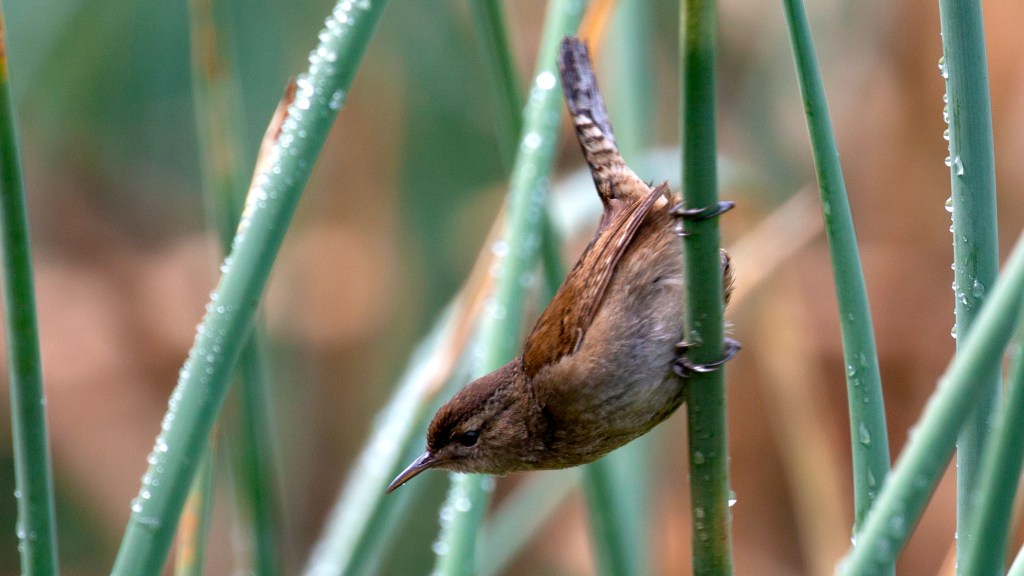
Marsh Wrens are highly territorial birds, with males singing loudly and continuously to defend their nesting territories during the breeding season. They build intricate, globular nests made of cattails, sedges, and other marsh vegetation. The female lays 4-7 eggs, which she incubates for about two weeks. Both parents feed and care for the chicks, which fledge after about two weeks. Marsh Wrens are primarily insectivorous and feed on a variety of small invertebrates, including spiders, caterpillars, and beetles.
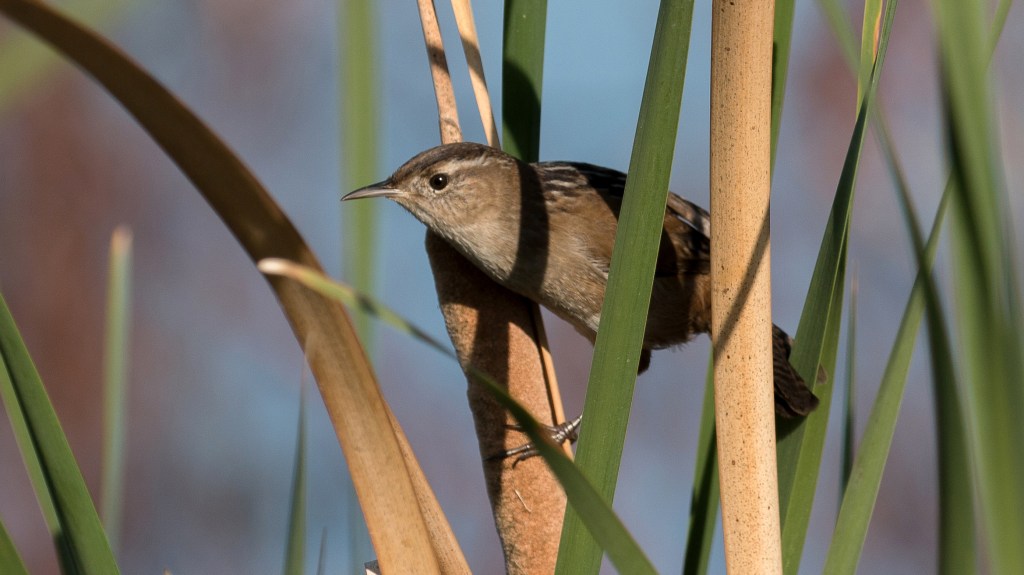
In the Central Valley of California, Marsh Wrens are commonly found in freshwater marshes and riparian habitats along rivers and streams. They are most easily spotted by their loud and incessant singing and their distinctive nest structures. Marsh Wrens are an important indicator species of the health of wetland habitats, and their presence or absence can be used to monitor the success of wetland restoration projects.
Bewick’s Wren #46
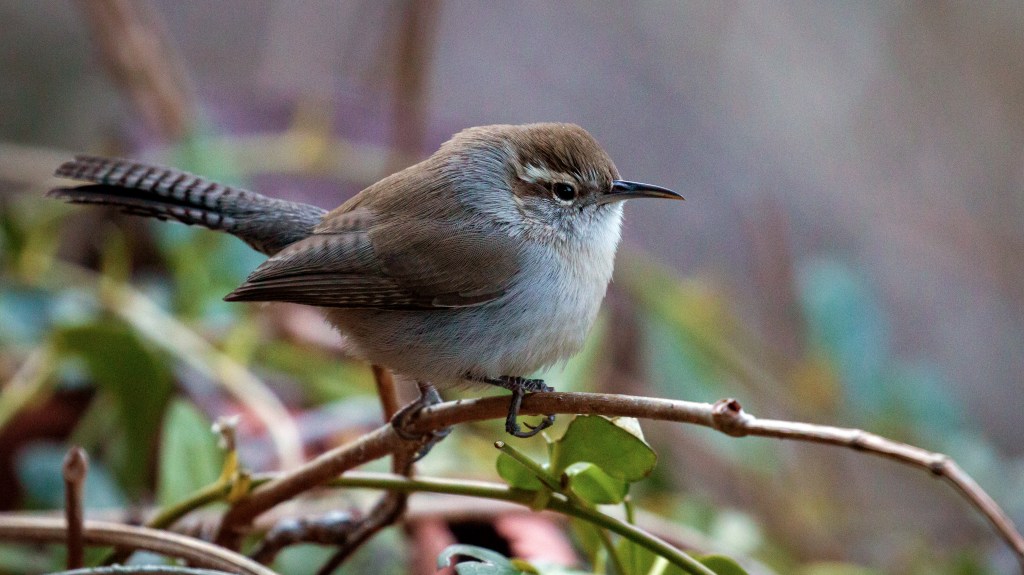
The Bewick’s Wren (Thryomanes bewickii) is a small, brown bird that is common in the Central Valley of California. They have a distinctive appearance, with a long, thin bill, a brownish-gray back, and a cream-colored belly. They also have a distinctive white eyebrow stripe above their eyes and a long tail that they often hold upright.
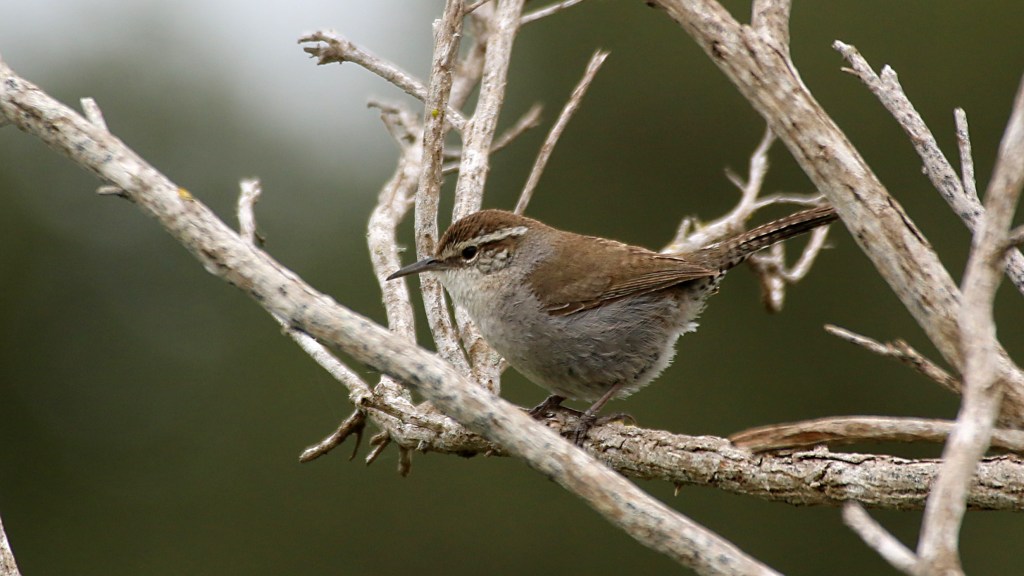
Bewick’s Wrens are a common sight in gardens, parks, and other urban areas throughout the Central Valley. They are also found in oak woodlands, riparian areas, and other brushy habitats. They are active and vocal birds, hopping and flitting around in search of insects, spiders, and other small invertebrates.

Breeding pairs of Bewick’s Wrens are monogamous and typically raise two broods per year. They build nests in cavities, such as tree holes or birdhouses, and the female lays between 4-7 eggs per clutch. Both parents share the duties of incubating the eggs and feeding the chicks. The population of Bewick’s Wrens in the Central Valley is considered stable, but they face threats from habitat loss and fragmentation, as well as predation by domestic cats and other predators.
BONUS BIRD – Rock Wren (Excluded from 100 Common Birds due to it’s limited habitat preference of rocky outcrops)
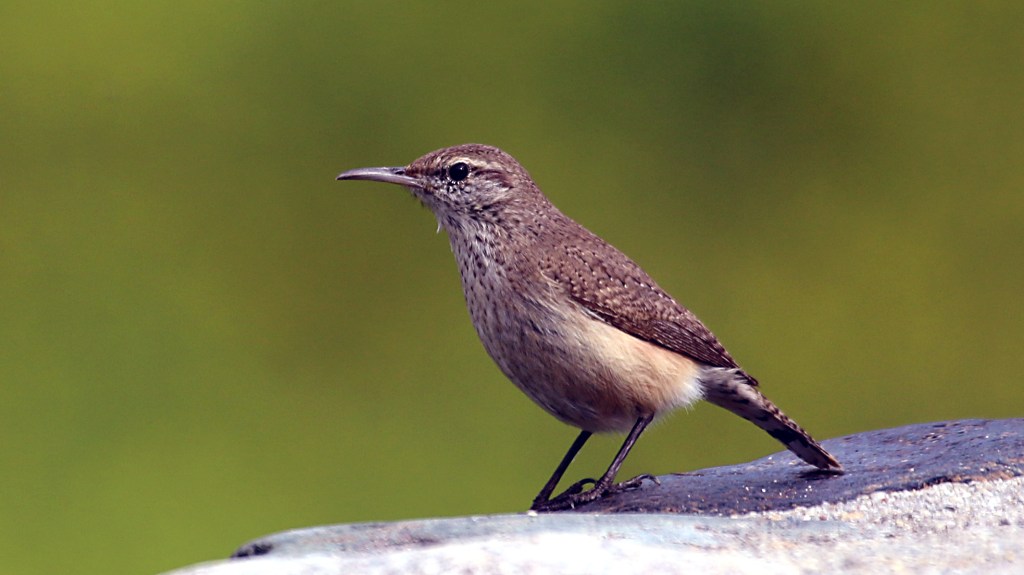
The Rock Wren (Salpinctes obsoletus) is a small songbird that is commonly found in rocky habitats throughout western North America, including the Central Valley of California. This species is about 4.5-5 inches in length and has a distinctive long, curved bill that is well-suited for foraging in rock crevices and cracks. They are brownish-gray overall, with dark barring on their wings and tail. They have a peculiar habit of doing rapid bobbing as the stand and walk.

Rock Wrens are adapted to life in rocky habitats, where they build their nests in crevices or under rocks. They are active year-round in California, and are known for their distinctive song, which is a series of high-pitched, tinkling notes. They are primarily insectivores, feeding on a variety of insects, spiders, and other small invertebrates. Although they are not considered threatened or endangered, habitat loss and disturbance can have a negative impact on their populations.
BONUS BIRD – Canyon Wren (Excluded from 100 Common Birds due to it’s limited habitat preference of rocky outcrops and canyons)

The Canyon Wren (Catherpes mexicanus) is a small, brownish wren that is commonly found in the rocky canyons and cliffs of the western United States, including the Central Valley of California. It is characterized by its distinctive, loud, and musical song, which it uses to communicate with its mate and defend its territory.
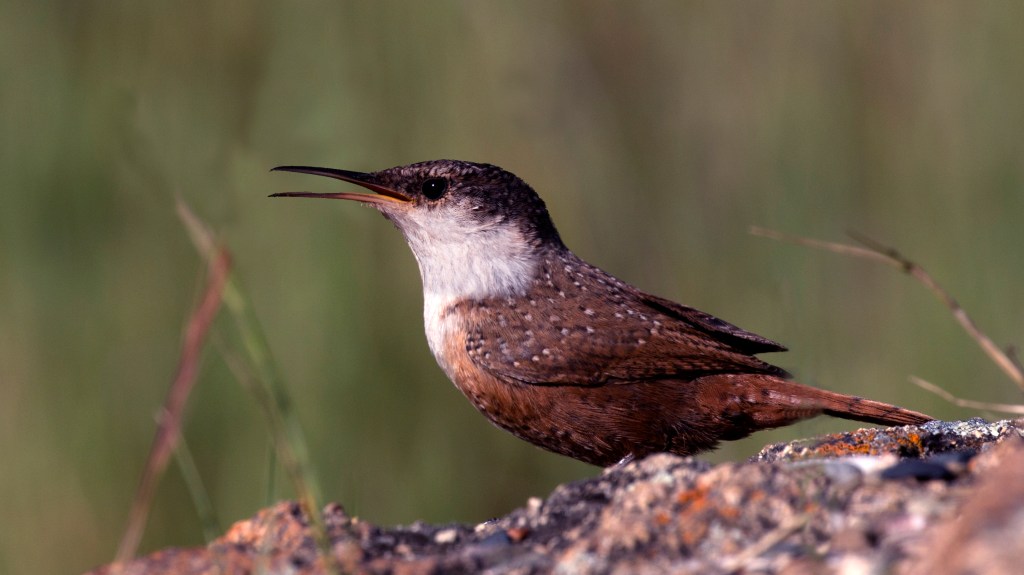
In terms of appearance, the Canyon Wren has a striking and distinctive plumage, with a reddish-brown back, a white throat, and a long, curved bill. Its tail is relatively short, and it has white spots on its wings, which are visible when it is in flight. The bird is also known for its agile and acrobatic movements, which it uses to navigate the rocky terrain of its habitat.

The natural history of the Canyon Wren is closely tied to its rocky canyon habitat. It is a highly territorial bird that defends its territory vigorously against intruders, using its loud song to warn off other birds and animals. It feeds primarily on insects, which it captures by hopping and crawling along the rocky surfaces of its habitat. During the breeding season, the male Canyon Wren will build several nests, which the female will inspect before choosing one to use for laying her eggs. Overall, the Canyon Wren is an interesting and unique bird that is well adapted to the challenging environment of the Central Valley’s rocky canyons.
BONUS BIRD – Pacific Wren (Excluded from 100 Common Birds due to it’s limited/rare presence in the valley)
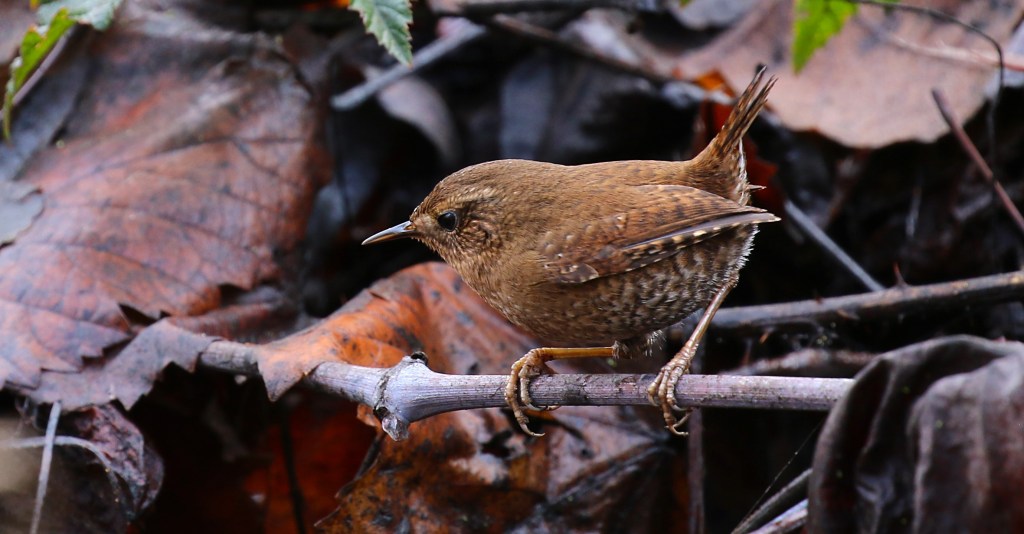
The Pacific Wren (Troglodytes pacificus) is a small, plump bird that can be found in the Central Valley of California. The bird is approximately 4.5 inches in length and has a warm, brownish-gray coloration with a darker brown head and back. Its tail is often cocked up and it has a short, stubby beak.
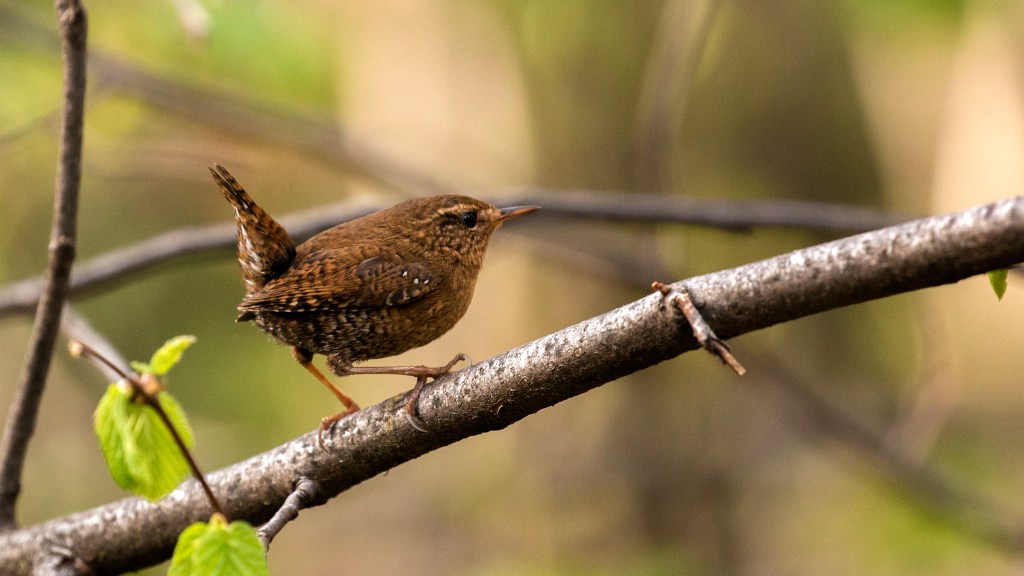
The Pacific Wren is typically found in dense, moist forests near water sources such as streams or wetlands. They are active birds that are constantly foraging for insects and spiders among the leaf litter and fallen logs. During the breeding season, males will build several nests to attract females and will sing loudly to defend their territory.
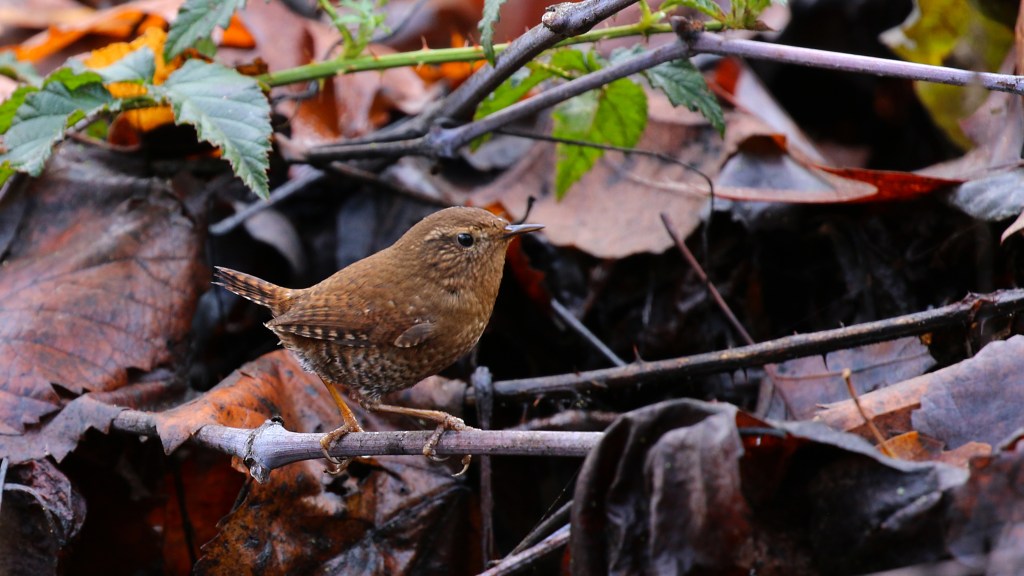
Although the Pacific Wren is a year-round resident of the Central Valley of California, its population has declined in recent years due to habitat loss and fragmentation. Conservation efforts are underway to protect remaining habitat and restore degraded areas to ensure the survival of this species.
Previous posts from the Learn 100 Common Valley Birds series:

 Reflections of the Natural World
Leave a comment