By Jim Gain

Learn 100 Common Valley Birds is a photo blog series highlighting the 100 most common Valley bird species.
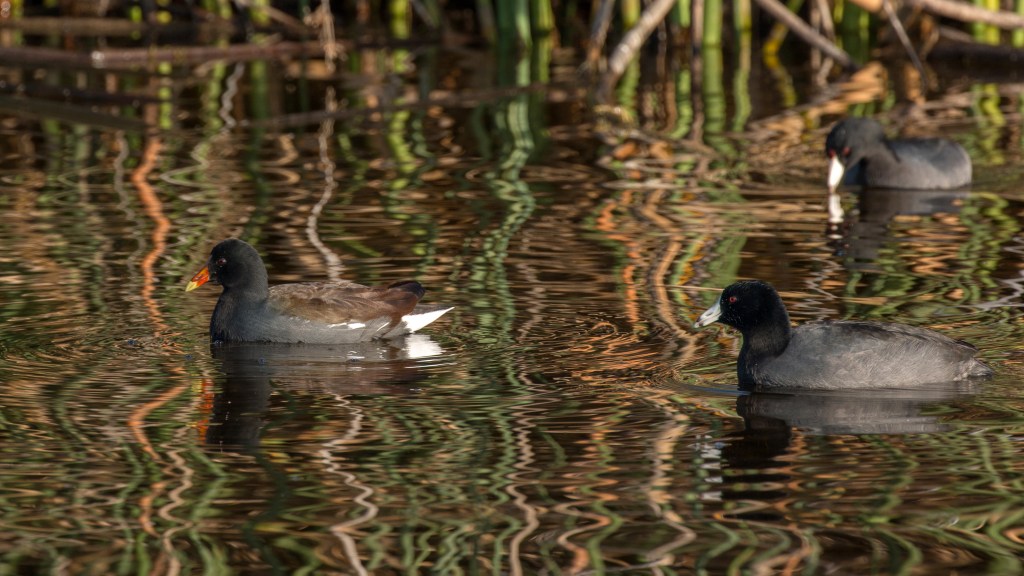
Post #22 in the Learn 100 Common Valley Birds series. (Species 34 & 35/100)
American Coot – Species #34
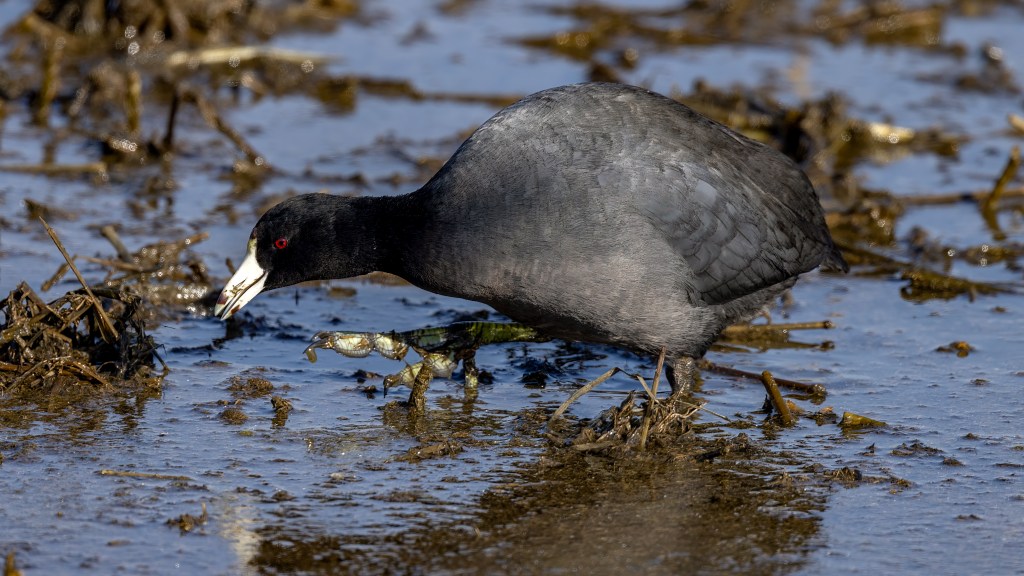
The American Coot, (Fulica americana), is a common waterbird found in the Central Valley of California. These birds have a distinctive appearance with a rounded, chicken-like body, black plumage, and a white beak. They also have unique lobed toes, which help them swim and dive in the water.

American Coots are social birds that gather in large flocks on freshwater lakes, ponds, and marshes throughout the year. They are omnivorous and feed on a variety of aquatic plants, invertebrates, and small fish.
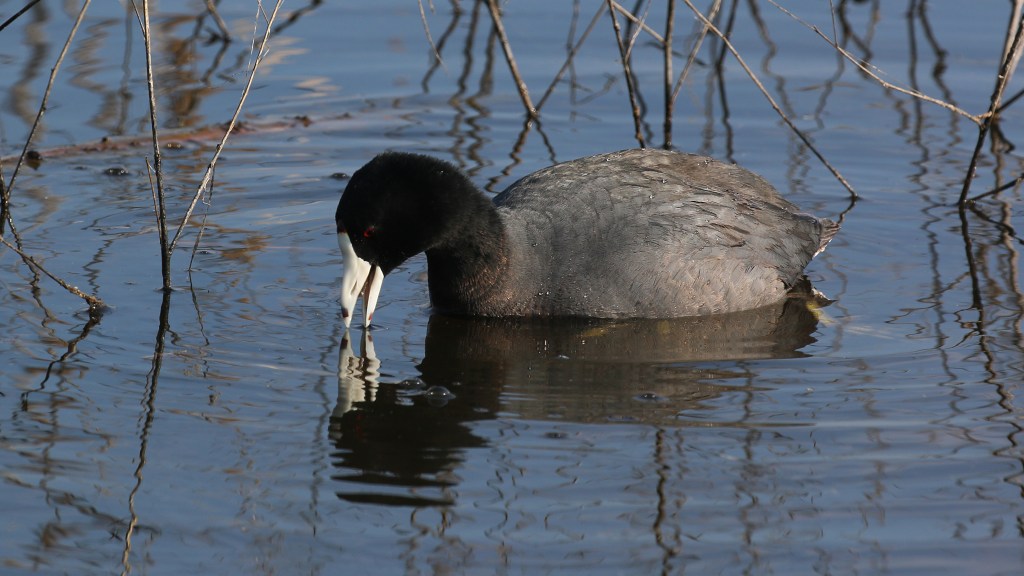
During breeding season, they build floating nests in dense vegetation near the water’s edge and lay a clutch of 8-12 eggs. The chicks are precocial and able to swim and dive within hours of hatching. Overall, American Coots are an important part of the Central Valley’s ecosystem and a common sight for birdwatchers and nature enthusiasts alike.
Common Gallinule – Species #35

The Common Gallinule, (Gallinula galeata) formerly known as the Common Moorhen, is a medium-sized waterbird found in the wetlands and marshes of the Central Valley of California. This species has a dark, almost black plumage with a distinctive red frontal shield and yellow-tipped bill. The legs are long and greenish-yellow, with large toes that enable them to walk on floating vegetation. They are a highly adaptable species that can be found in a wide range of aquatic habitats, including lakes, ponds, marshes, and rice fields.

During breeding season, Common Gallinules are highly territorial and will defend their nesting sites aggressively. They build nests from floating vegetation and lay clutches of 6 to 10 eggs. The chicks are born precocial, meaning they are capable of walking and swimming shortly after hatching. The diet of Common Gallinules consists of a variety of plant and animal material, including seeds, insects, snails, and small fish.
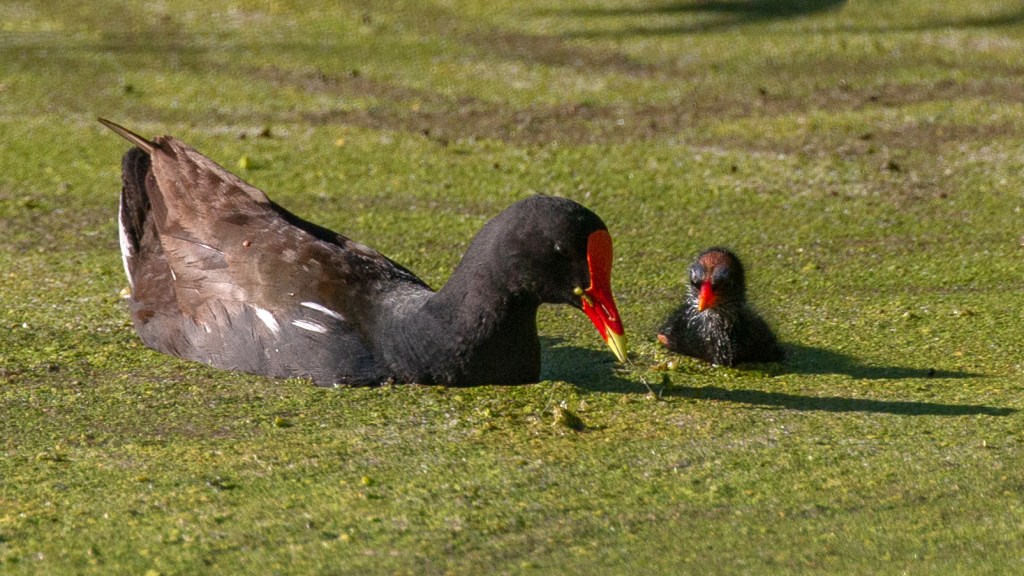
Despite being common throughout much of their range, habitat loss and degradation have caused declines in some populations, making conservation efforts important to ensure their survival.
Previous posts from the Learn 100 Common Valley Birds series,

 Reflections of the Natural World
Leave a comment